Home › Drywall With Insulation and Vapor Barriers
We install drywall with insulation and vapor barriers in Savannah Sheetrock, GA to improve comfort and efficiency. Our crews place the right insulation, seal penetrations, and finish drywall for tight, energy conscious wall assemblies. Ideal for new builds, additions, and exterior wall upgrades.
Savannah Sheetrock provides professional insulated drywall installation throughout Savannah Sheetrock, GA, Georgia and the surrounding area. Our licensed, insured crew delivers safe, clean, on-time work with a free estimate before anything begins. Call (912) 600-3740 or request your free quote.
Insulated Drywall Done Right for Savannah Homes
In our coastal climate, insulated drywall installation is not just about comfort. It is about protecting your home from moisture, mold, and unnecessary energy loss. Savannah Sheetrock specializes in drywall with insulation and vapor barriers that is tailored to how homes actually live and age in Savannah, GA.
Older bungalows in Ardsley Park, 1960s ranch homes off Skidaway, and newer builds on the southside all have different wall assemblies. We start by examining what you already have: existing insulation type and thickness, any signs of moisture intrusion, and whether there is an existing vapor retarder or radiant barrier. This matters because adding the wrong barrier in the wrong place can trap moisture inside your walls.
Our insulated drywall projects are designed to do three things at once: improve temperature control, manage humidity, and keep wall cavities dry. That means choosing the right insulation R-value for your specific walls, positioning the vapor barrier correctly for our humid coastal conditions, and fastening new drywall so seams stay tight and finishes stay smooth for years.
From the first walkthrough, our goal is to explain what we see in plain language. If you have rooms that are always stuffy, walls that feel damp after heavy storms, or musty smells in certain areas, we zero in on those spots and recommend an insulated drywall assembly that addresses the root cause, not just the symptoms.
How We Install Drywall With Insulation and Vapor Barriers
A typical insulated drywall installation with Savannah Sheetrock follows a clear, step by step process, adjusted to whether we are working on new construction or an occupied home.
First, we open or access the wall or ceiling cavities that need attention. In remodels, we remove existing drywall carefully so we can inspect framing and look for water staining, rusted fasteners, or mold. In older Savannah homes, we often find uninsulated exterior walls, patchy fiberglass batts, or previous repairs that skipped a vapor retarder.
Next, we address any issues inside the cavity. This can include drying out a damp area, treating mild surface mold on framing, replacing damaged insulation, or adding metal or treated-wood framing repairs if leaks have caused rot. We do not cover over active moisture problems because that only hides the issue and makes it more expensive later.
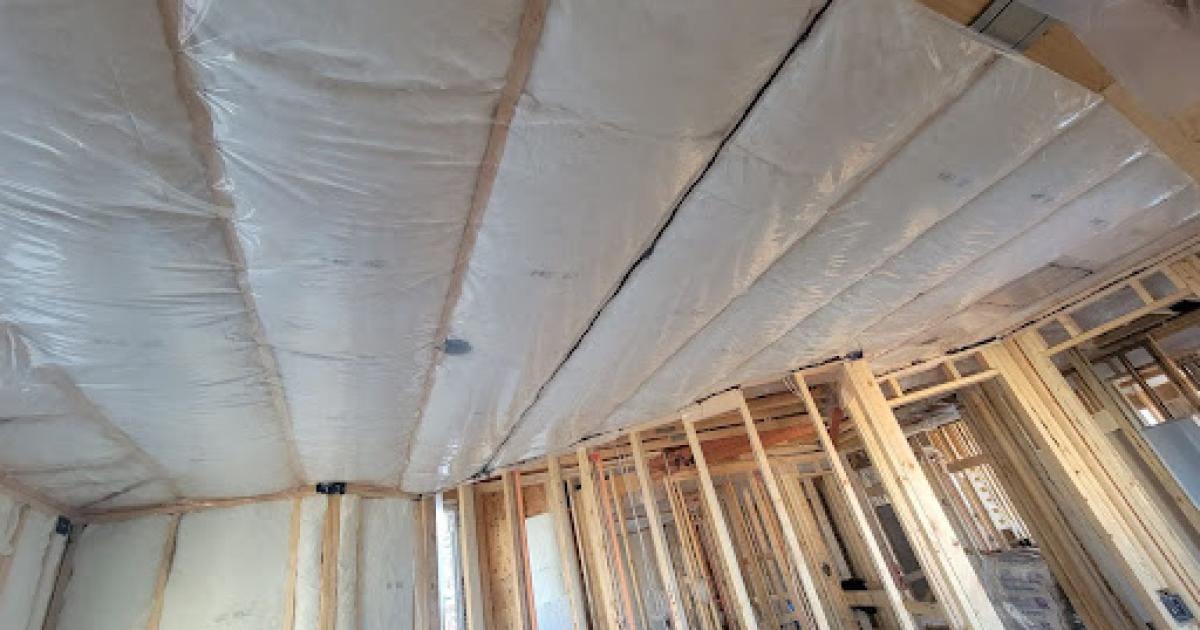
Then we install the new insulation. For most residential walls in our area, we use fiberglass or mineral wool batts fit snugly between studs, cut carefully around electrical boxes and plumbing lines so there are no large gaps. In some projects, especially on block walls or tight spaces, we may recommend dense pack cellulose or rigid foam boards instead.
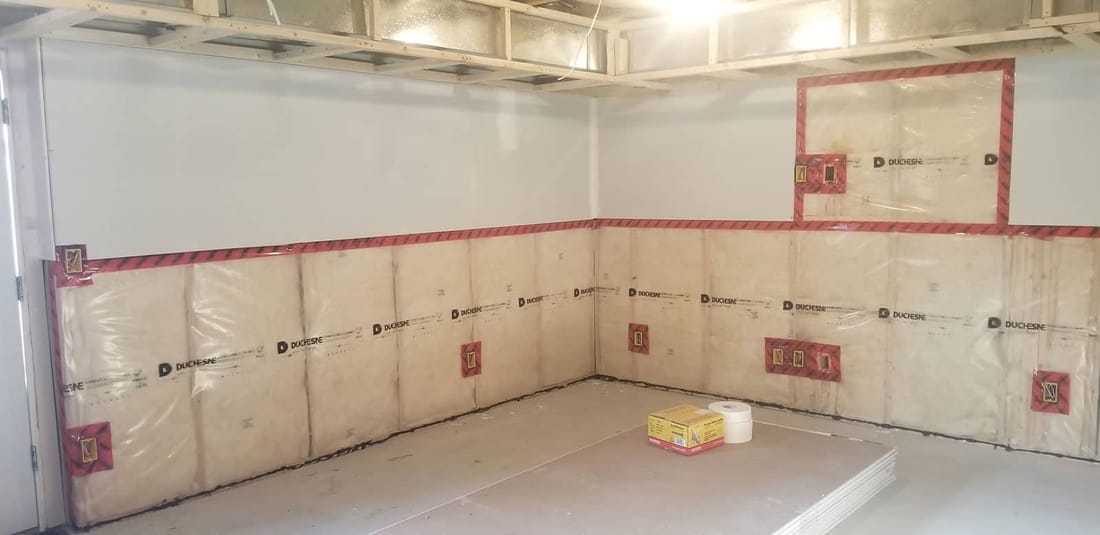
After that comes the vapor solution. In coastal Georgia, we generally avoid heavy plastic sheeting directly behind drywall on exterior walls because it can trap moisture. Instead, we often use kraft faced batts, smart vapor retarders, or a combination of carefully taped foam board and air sealing around penetrations. We select the product and placement based on your wall type, siding, and how your home is ventilated.
Only once the interior of the wall is correct do we hang the drywall. Panels are cut to minimize seams, fastened with corrosion resistant screws, and staggered where possible. We then tape, mud, and sand joints in multiple passes so the final finish is ready for paint or texture.
Material Choices for Insulated Drywall in Savannah’s Climate
The products that work in a dry inland climate are not always right for Savannah. At Savannah Sheetrock we choose insulation and vapor control products that can handle humidity, occasional storm driven rain, and air conditioning that runs much of the year.
For insulation, common choices include fiberglass batts, mineral wool batts, and rigid foam boards. Fiberglass is cost effective and works well when installed carefully with full cavity coverage. Mineral wool resists moisture a bit better and adds sound control, which is popular in bedroom and media room walls. Rigid foam can improve thermal performance on block or masonry walls that are common in some mid century homes.
For vapor and air control, we focus on smart approaches rather than a one size fits all plastic sheet. Smart vapor retarders can change permeability as humidity levels change, which helps walls dry either inward or outward depending on the season. Taped foam boards can serve double duty as insulation and an air barrier on some projects. In bathrooms, laundry rooms, and over crawl spaces, we pay extra attention to sealing around pipes, can lights, and vent penetrations so humid air does not sneak into the cavity.
We also consider your exterior. A brick home in historic Savannah behaves differently than a vinyl sided home in Pooler or a stucco finish on Tybee. During your estimate, we match R-values, insulation types, and vapor strategies with the actual structure so your insulated drywall assembly works with the building instead of against it.
What Affects the Cost of Insulated Drywall Installation
Homeowners often ask why one insulated drywall quote is higher than another. The real differences usually come down to what is happening inside your walls and how carefully the assembly is designed.
Key cost drivers include the amount of demolition and preparation needed, the insulation type and thickness, and the level of vapor and air sealing work. Removing old plaster or multiple layers of patchwork drywall in a historic Savannah house takes longer than pulling a single layer in a newer subdivision home. If we find moisture damage, mold remediation, or framing repairs are required, we will price those separately and explain the options.
Insulation choice also affects price. Fiberglass batts are usually the least expensive, mineral wool a bit more, and rigid foam or dense pack options higher still. However, in certain problem areas, spending slightly more on the right insulation can solve comfort and condensation issues that cheaper options would leave unresolved.
The finish level matters as well. If you need a Level 5 finish for a high light, smooth painted wall, that will require more skim coating and sanding than a standard Level 3 or 4 surface that will receive a light texture. Ceiling height, the number of inside and outside corners, and access (for example tight stairways or third floor spaces) also influence labor time.
During your estimate, Savannah Sheetrock itemizes these pieces so you can see where your investment is going and which upgrades will make the biggest difference in comfort and durability.
Local Issues We Solve With Insulated Drywall and Vapor Barriers
Savannah homes face a specific set of challenges that insulated drywall installation can address when it is done correctly. Our team has spent years working in the city and surrounding communities, so we have seen the same problems appear again and again.
One common issue is condensation on interior wall surfaces or inside exterior walls that are heavily cooled in summer. When warm, humid outdoor air leaks through gaps around windows or siding and hits a cold surface, water can form inside the wall. We tackle this by sealing air leaks before installing insulation and by using vapor retarders that slow moisture without trapping it.
Another issue is uneven temperatures between rooms. Front rooms that face the sun, additions, or enclosed porches that were not insulated properly can be uncomfortable. We often open a small test area to verify what is inside the wall, then design an insulated drywall solution that matches the rest of the home. This can include upgrading insulation depth, improving the continuity of the vapor retarder, and tying in new drywall so there is no visible transition.
We also help homeowners who are updating short term rental units or in-law suites. In these cases, sound control becomes almost as important as temperature control. We may recommend mineral wool insulation, resilient channels, and specific drywall thicknesses to muffle noise while still managing moisture. Our goal is for your investment to improve privacy and comfort without creating hidden moisture risks.
Because hurricanes and heavy storms are part of life here, we always look for past water intrusion and plan for future events. Where practical, we select materials that tolerate occasional dampness better and we explain how to spot early signs of moisture problems so you can address them quickly.
What to Expect When You Hire Savannah Sheetrock
Inviting a contractor to open up your walls can feel stressful. Savannah Sheetrock works to make insulated drywall installation as organized and predictable as possible.
Before work begins, we walk through each area with you, mark walls and ceilings that will be opened, and discuss how we will protect floors and furnishings. In occupied homes, we typically set up plastic containment, lay protective floor coverings, and, when dust levels warrant it, use negative air or HEPA filtration during demolition and sanding.
During the job, you can expect daily progress updates and clear explanations of any hidden conditions we uncover. If we find something unexpected, such as an old roof leak that never fully dried or unsafe wiring in a wall cavity, we pause to show you and talk through the options before moving on.
Once insulation, vapor barriers, and drywall are installed and finished, we clean up thoroughly and walk the project with you. We review how the wall assembly was built, where vapor materials were used, and any maintenance tips specific to your home. For example, we might point out a previously leaky window you should keep an eye on or an exterior area where adding caulk could further reduce air and moisture intrusion.
The result is a quieter, more consistent indoor environment and wall assemblies that are better able to handle Savannah’s humidity. Our team stands behind both the appearance and performance of our work, and we are available after the job if you have questions about anything we installed.